Brand governance, seen from the other side of the desk
Most conversations about brand governance probably start with an eye roll at head office. How do we make sure the logo is correct, how do we keep offers current, the style consistent and the copy accurate?
Look at it from the local dealers' side, though, and governance could feel like friction.
A form to request artwork, a wait for approval, a PDF that needs someone with design software just to update the phone number. Put that against a competitor who's enabled the same needs to take five minutes with no intervention, and you can probably guess which brand ends up being promoted more heavily. Rules that make your material harder to use don't necessarily protect your brand. Sometimes they just mean it gets used less or by-passed in some random way.
What "easy" actually means to a busy partner
How easy is easy?
In practice it tends to come down to a handful of quite specific things.
They can find it without asking. The current campaign is obvious. They're presented with only the material that's relevant for them - no scrolling or searching through unrelated material.
It already looks like theirs.
Their logo, address, opening hours and phone number are already on it, without anyone retyping them. Many local businesses have spent years building their own name in their region so material that puts their brand comfortably alongside yours is far more likely to get used than something that makes them look like an afterthought.
They can change what they need to, and nothing they shouldn't.
A local price, an event date, a photo of their own team or premises. The core of your brand stays exactly as it is.
It finishes the job.
A social image they can post today, something they can download and use now or a print-ready file for an order placed with an approved printer.
It's not rocket science, but it is the difference between support that gets used and support that gets lost in the depths of the inbox.

When governance makes the right thing the easy thing
When brand control is built into the day-to-day workflow, it stops being the thing that slows partners down.
A template where the brand-critical parts are fixed and the local parts are pre-populated and/or editable doesn't need waiting for a designer to check every version.
Content with an expiry date comes out of circulation on time, so nobody is left running an out-of-date offer. Where an approval step is genuinely needed, it leaves a record of who signed off on what and when. And because partners are working from one current source, there's much less reason for home-made versions to exist at all.
It might sound slightly counter-intuitive, but you end up with more control over your brand because you've made it easier to use properly.
"Local teams will always need to move quickly. The job of a central marketing team is to make sure the approved version is the quickest one to use, removing obstacles, and making the easiest route the right route”
Marc Stephenson, Resourcebase
A different way to judge your support
If your support is competing for attention, it's worth asking slightly different questions about it. Not only "is our material on brand?", but also:
- When a partner has only an hour for marketing this week, is ours the go-to brand to promote?
- How much of what we produce is actually relevant to the needs of each local market.
- When partners go rogue, is it because they don't care about the brand or because our material was harder to use than doing something their own way?
Some visibility of usage helps here too. Knowing which partners are using current material and which have gone quiet turns a vague feeling that "some of the network doesn't engage" into something you can act on. Often that's a phone call rather than another email.

A dealer engagement platform with built-in brand control
Resourcebase is a dealer support platform with digital asset management and it gets configured around the way each network actually works.
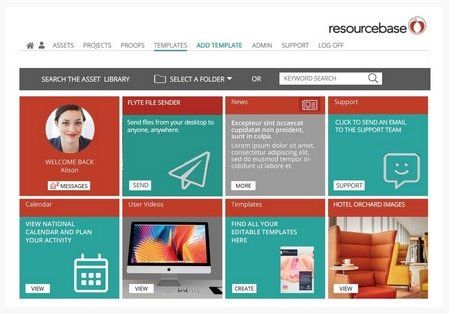
Partners go to one place to get current, approved content that's relevant to them. Templates pull in their own logo and details, let them change what they're allowed to, and keep the core brand intact. Finished work can be downloaded or sent to an approved printer.
Central teams keep the control they need, with expiry dates, approval records and a view of what's being used.
The software matters, but the bigger shift is in how you think about the network. If your partners are choosing between brands every week, making yours the easiest one to promote is one of the most practical things a central marketing team can do. Get that right, and good governance tends to follow.
If that's a conversation you're having internally, we'd be glad to compare notes. Please get in touch with Marc or David.
This is paragraph text. Click it or hit the Manage Text button to change the font, colour, size, format and more. To set up site-wide paragraph and title styles, go to Site Theme.